
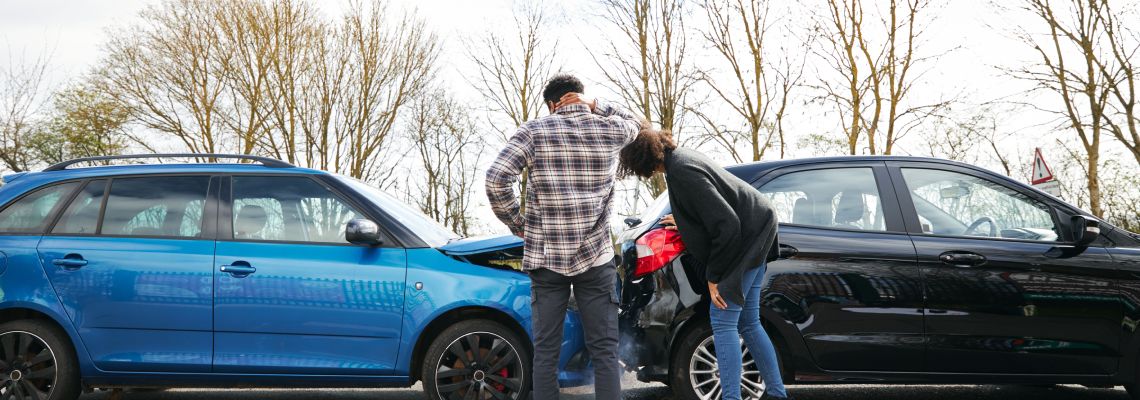
How Comparative Fault Works in Car Accident Claims
After a car accident, you may face injuries, vehicle damage, missed work, and mounting expenses. Determining who caused the collision is an important part of pursuing compensation, but fault is not always assigned entirely to one driver.
Kansas law allows responsibility to be divided among the people whose actions contributed to an accident. If you are assigned part of the fault, your percentage can reduce your compensation or prevent you from recovering damages altogether.
At Oleen Law Firm, we help people in Manhattan, Junction City, and surrounding Kansas communities understand how shared fault may affect their accident claims. If you were injured in a crash and have questions about liability or compensation, contact us to discuss your situation.
What Does Comparative Fault Mean?
Comparative fault is a legal rule used when more than one person contributed to an accident. Instead of placing all responsibility on one driver, the parties, insurers, or a jury may assign a percentage of fault to each person whose conduct caused the collision.
For example, one driver may have been speeding while another failed to yield the right of way. If both actions contributed to the crash, both drivers may receive a percentage of fault. The combined percentages should equal 100%.
A fault assessment is not based solely on which vehicle struck the other or whether an officer issued a traffic citation. It requires an examination of each person’s conduct and how that conduct contributed to the accident.
Kansas Uses a Modified Comparative Fault Rule
Kansas follows a modified comparative fault system. Under Kansas law, you may recover damages only when your fault is less than the combined fault attributed to the party or parties against whom you seek recovery.
In practical terms, you may recover if you are 49% or less at fault, but your compensation will be reduced according to your percentage. If you are assigned 50% or more of the fault, you cannot recover damages from the other responsible parties.
Suppose you sustain $100,000 in damages and are found 20% responsible for the collision. Your potential recovery would be reduced by 20%, leaving $80,000. If you were found 50% responsible, however, Kansas law would bar your recovery.
This threshold makes fault disputes especially important. Even a small difference in the assigned percentage may determine whether you receive reduced compensation or none at all.
How Is Fault Determined After a Car Accident?
Fault is determined by examining what happened before and during the collision. Insurance companies may make an initial assessment when evaluating a claim, but their conclusions are not necessarily final. If the case proceeds to trial, the factfinder may assign the percentages of fault.
Evidence commonly considered includes:
Police reports: Reports may document the scene, drivers’ statements, witness information, citations, and an officer’s observations. A police report does not by itself decide civil liability.
Witness statements: People who saw the accident may provide information about traffic signals, vehicle movements, speed, or other relevant circumstances.
Photographs and videos: Scene photographs, surveillance recordings, traffic-camera footage, and dashcam video may show vehicle positions, road conditions, or how the collision occurred.
Vehicle damage: The location and severity of the damage may help establish the direction and force of impact.
Traffic laws: Evidence that a driver was speeding, following too closely, distracted, or failing to yield may help establish that the driver contributed to the collision.
Electronic and reconstruction evidence: Vehicle-event data, mobile-phone records, measurements, and accident reconstruction may be useful in disputed or serious cases.
We examine the available evidence to determine whether the percentage proposed by an insurer accurately reflects the circumstances of the crash.
How Does Comparative Fault Affect Compensation?
Comparative fault can reduce compensation for the losses caused by an accident. Depending on the evidence and the extent of your injuries, recoverable damages may include:
Medical expenses.
Future medical care.
Lost wages.
Reduced earning capacity.
Property damage.
Pain and suffering.
Other accident-related losses.
Your percentage of fault is applied to the total damages supported by the evidence. For example, if your damages are $50,000 and you are found 10% at fault, your recovery would be reduced to $45,000.
Kansas also has a no-fault automobile insurance system that generally provides certain personal injury protection benefits without requiring you to prove that another driver caused the crash. Comparative fault becomes particularly important when you pursue a liability claim against another party for losses available under applicable law.
The existence of PIP coverage does not eliminate the need to investigate fault. Serious injuries and losses exceeding available benefits may lead to a claim against an at-fault driver, subject to Kansas insurance and personal injury requirements.
Can More Than Two People Share Fault?
Fault is not always limited to the two drivers involved. Depending on the circumstances, responsibility may also be attributed to an employer, vehicle owner, manufacturer, government entity, pedestrian, bicyclist, or another person whose conduct contributed to the accident.
In a multi-vehicle collision, each driver may receive a separate percentage. Kansas law requires the causal fault of all relevant parties to be compared so that responsibility is allocated according to each person’s contribution to the occurrence.
Identifying every potentially responsible party is important because the allocation may affect both your percentage of fault and the compensation available from others.
How Can You Respond to an Unfair Fault Allegation?
An insurance company may allege that you contributed to the crash even when you believe the other driver was primarily responsible. You do not have to accept an unsupported fault assessment.
After an accident, you can help preserve your claim by:
Reporting the crash to law enforcement when required.
Photographing the vehicles, scene, traffic controls, and visible injuries.
Obtaining contact information from witnesses.
Seeking prompt medical attention.
Preserving dashcam footage and other electronic evidence.
Keeping medical bills, repair estimates, wage records, and receipts.
Avoiding speculation about fault in recorded statements or social media posts.
Reviewing your options before accepting a settlement.
Evidence can disappear quickly after car accidents. Vehicles are repaired, video is overwritten, and witnesses’ memories may fade. Preserving relevant information early can help you respond to allegations that do not accurately reflect what occurred.
Why Should You Be Careful When Speaking With Insurers?
An insurance adjuster may ask about your speed, attentiveness, physical condition, or actions before the collision. Your responses could later be used to assign you a share of the fault.
Provide accurate information, but do not guess about facts you do not know. You may not yet have access to video, witness accounts, vehicle data, or other evidence needed to understand how the crash occurred.
You should also review the full extent of your injuries and losses before accepting a settlement. A signed release may prevent you from seeking additional compensation later, even if your condition worsens or previously unknown expenses arise.
Car Accident Attorneys Serving Manhattan and Junction City, Kansas
Comparative fault can determine whether you receive full compensation, a reduced amount, or no recovery from another responsible party. Because Kansas bars recovery when your fault reaches 50%, evidence and accurate fault allocation can have a substantial effect on your claim.
At Oleen Law Firm, we review accident evidence, evaluate disputed fault, communicate with insurers, and help you pursue compensation supported by the facts. We serve clients in Manhattan, Junction City, and surrounding Kansas communities. Contact our firm today to discuss your accident and legal options.